You’ve decided you want more out of your outdoor space. The next question is what, exactly, to build. A patio enclosure and a sunroom both give you a covered, protected area attached to your home, but they’re pretty different products with different costs, comfort levels, and long-term value.
If you’re a Portland homeowner weighing your options, this guide breaks down both choices honestly so you can figure out which one fits your lifestyle, your budget, and Maine’s weather. Many homeowners exploring sunroom builder services in Portland, ME, find that the answer depends less on price and more on how they plan to use the space year-round.
Not sure which direction makes more sense for your property? Speak with our team for a free, no-pressure consultation.
What is a Patio Enclosure, Exactly?
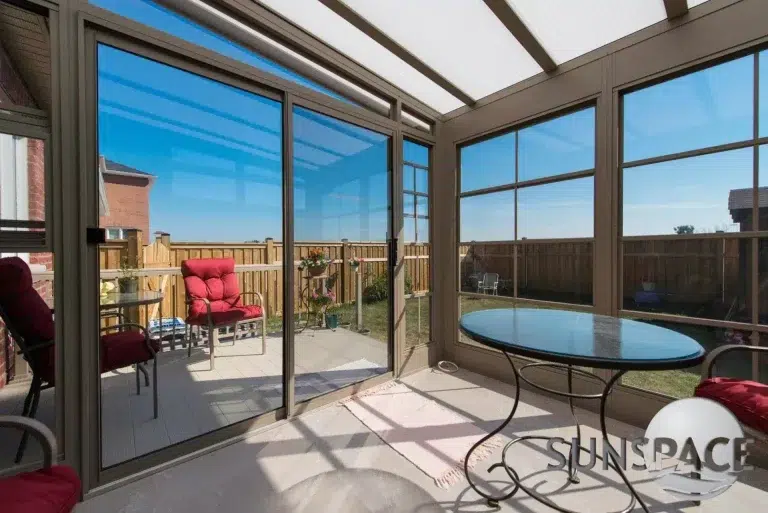
A patio enclosure is a structure that surrounds an existing patio or outdoor area with walls, typically using screens, vinyl panels, or lightweight framing. It’s meant to create a semi-protected space that keeps out bugs and light wind while maintaining an open, airy feel.
Patio enclosures are generally less expensive than sunrooms and can be added to an existing concrete slab or patio surface without major structural changes. That’s a real advantage for homeowners on a tighter budget or those who want a quicker project.
But here’s the trade-off: most patio enclosures aren’t insulated, aren’t designed for heating or cooling, and don’t perform well once the temperature drops below 50°F. In Portland, that limits you to a shorter window of comfortable use than most homeowners expect going in.
What Makes a Sunroom Different?
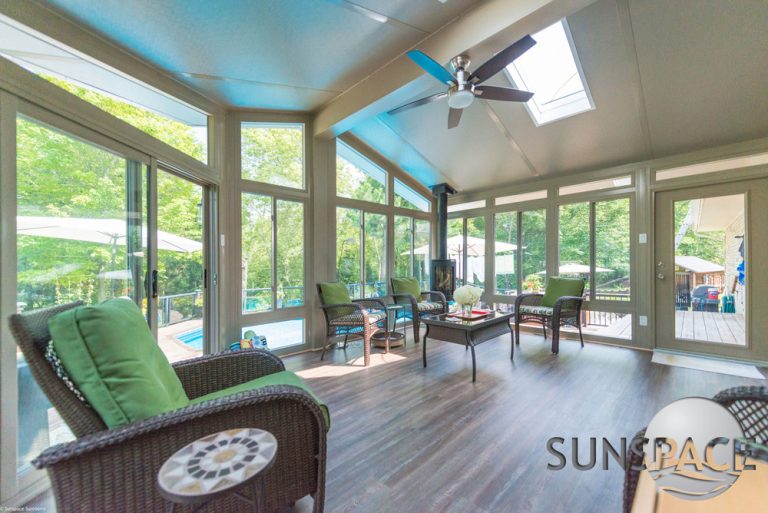
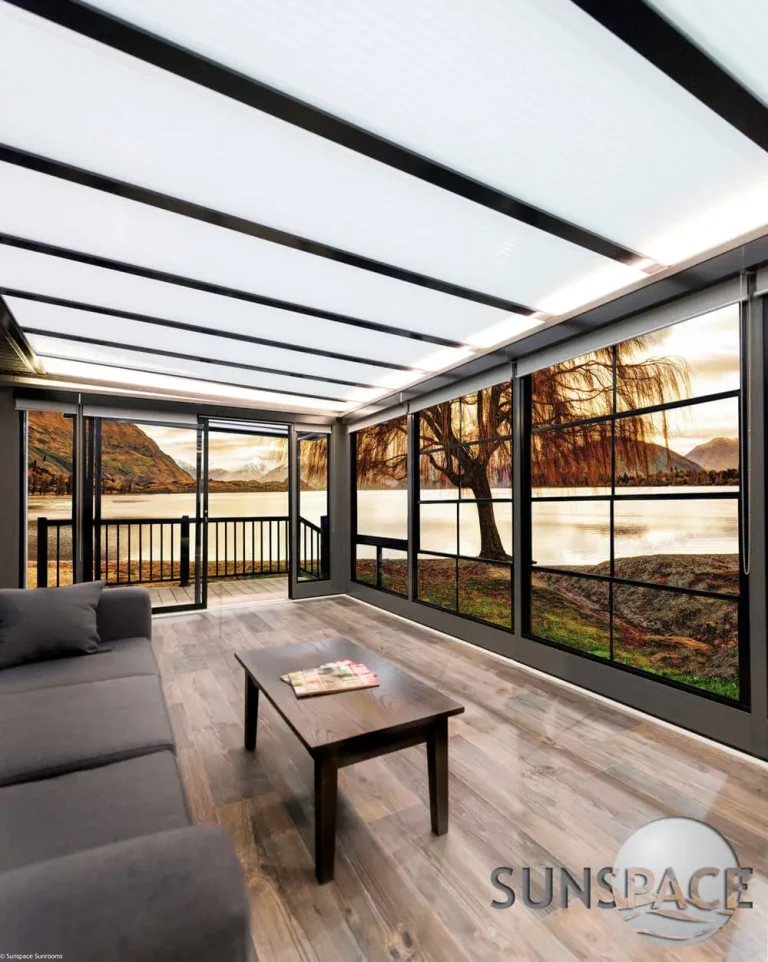
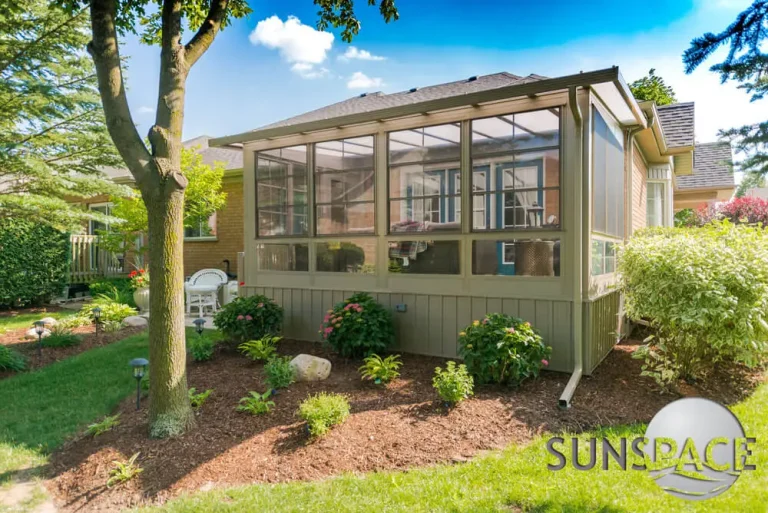
A sunroom is a fully enclosed, structurally sound addition attached to your home. It uses glass walls, insulated framing, and a proper roof system to create a livable space that connects your interior to the outdoors.
Sunrooms come in different configurations depending on how much year-round use you want. A three-season sunroom handles spring through fall comfortably. A fully insulated four-season sunroom runs with heating and cooling and works just like any other room in your house, regardless of what’s happening outside.
That distinction matters a lot in Maine’s climate. Portland gets real winters. A space that can’t handle cold temperatures isn’t really adding livable square footage to your home. It’s just another porch.
Side-by-Side Comparison
Both options have their place, but the differences are meaningful. Here’s a clear look at how they stack up:
| Feature | Patio Enclosure | Sunroom |
| Weather Protection | Partial | Full |
| Usable Season in Maine | 4–5 months | 8–12 months |
| Insulation | Minimal to none | Available (three or four-season) |
| Heating and Cooling | No | Yes (four-season models) |
| Adds Livable Sq. Ft. | No | Yes (insulated models) |
| Home Appraisal Impact | Low | Moderate to high |
| Maintenance | Low to moderate | Low |
| Upfront Cost | Lower | Higher |
Climate Performance in Portland, ME
This is where the two options really separate. Maine’s weather is not mild. Portland sees harsh winters, unpredictable springs, and a real bug season that starts early and ends late. A patio enclosure handles screens and light rain. It doesn’t handle snow load, freezing temperatures, or high winds.
A well-built sunroom, by contrast, is engineered for exactly this kind of climate. Insulated roof panels, Low-E argon glass, and heavy-gauge aluminum framing are built to hold up through Maine winters without warping, leaking, or losing structural integrity.
If year-round comfort is the goal, choosing energy-efficient glass for your sunroom makes a significant difference in how the space performs across all four seasons, something a patio enclosure simply can’t replicate.
Cost Differences: What to Expect
Patio enclosures are generally less expensive upfront. A basic screen or vinyl enclosure on an existing patio can cost significantly less than a new sunroom addition. But that comparison isn’t as straightforward as it looks.
A few things to consider:
- A patio enclosure doesn’t add appraisable square footage, while an insulated sunroom often does.
- Enclosures may need replacement or repair sooner, especially in harsh climates.
- A sunroom’s longer usable season means more value per dollar over time.
- Heating and cooling a four-season sunroom can actually reduce HVAC load in adjacent rooms by acting as a thermal buffer.
The upfront savings on a patio enclosure can be real. But the long-term return from a quality sunroom tends to outpace it, especially in a climate like Portland’s.
Which One is Actually Better for Portland Homeowners?
The honest answer is: it depends on what you need the space to do.
A patio enclosure makes sense if you’re primarily looking to keep bugs out during summer gatherings, you already have a solid patio surface in good shape, and your budget is limited right now. It’s a reasonable choice for a specific seasonal function.
A sunroom makes more sense if you want a space you’ll use eight to twelve months of the year, you want to add real value to your home, and you’re looking for a room that feels like part of the house rather than a seasonal add-on. For most Portland homeowners who run the numbers, the benefits of adding a sunroom go well beyond comfort, touching on home value, usable space, and quality of daily life in a way a patio enclosure typically doesn’t.
What About Porch Enclosures?
It’s worth mentioning that porch enclosures sit somewhere between the two options. They’re a great solution if you have an existing covered porch and want to enclose it with vinyl or glass windows to extend its usable season. They’re less involved than a full sunroom addition but more functional than a basic screen enclosure.
If you have an existing porch structure in good condition, a porch enclosure might be the right middle ground before committing to a full sunroom build.
Frequently Asked Questions
Is a patio enclosure the same as a sunroom?
No. A patio enclosure typically uses screens or vinyl panels to create a semi-open space. A sunroom is a fully enclosed, structurally attached addition with glass walls and, in many cases, insulation and climate control.
Can a patio enclosure be used in winter in Maine?
Generally, no. Most patio enclosures aren’t insulated or heated, making them uncomfortable once temperatures drop in late fall. They’re best suited for use in warmer months.
Does a sunroom add value to my home?
An insulated four-season sunroom can add appraisable square footage and meaningful resale value. Three-season models add value as well, though typically less than fully conditioned rooms.
What’s the most cost-effective option for year-round outdoor living in Portland?
For year-round use in Maine’s climate, a three-season or four-season sunroom gives you a better return than a patio enclosure, even though the upfront cost is higher.
Can I convert a patio enclosure into a sunroom later?
In some cases, yes, depending on the existing foundation and structure. A contractor can assess whether your current enclosure can support an upgrade to a fully enclosed sunroom.
Ready to Figure Out the Right Fit?
Both options can improve your home. The right choice comes down to your climate expectations, your budget, and how much use you realistically want to get out of the space.
Sunspace by Sunrise Sunrooms works with Portland-area homeowners to find the right solution for their property, their lifestyle, and Maine’s weather. Reach out to schedule a free, no-pressure consultation with our team.