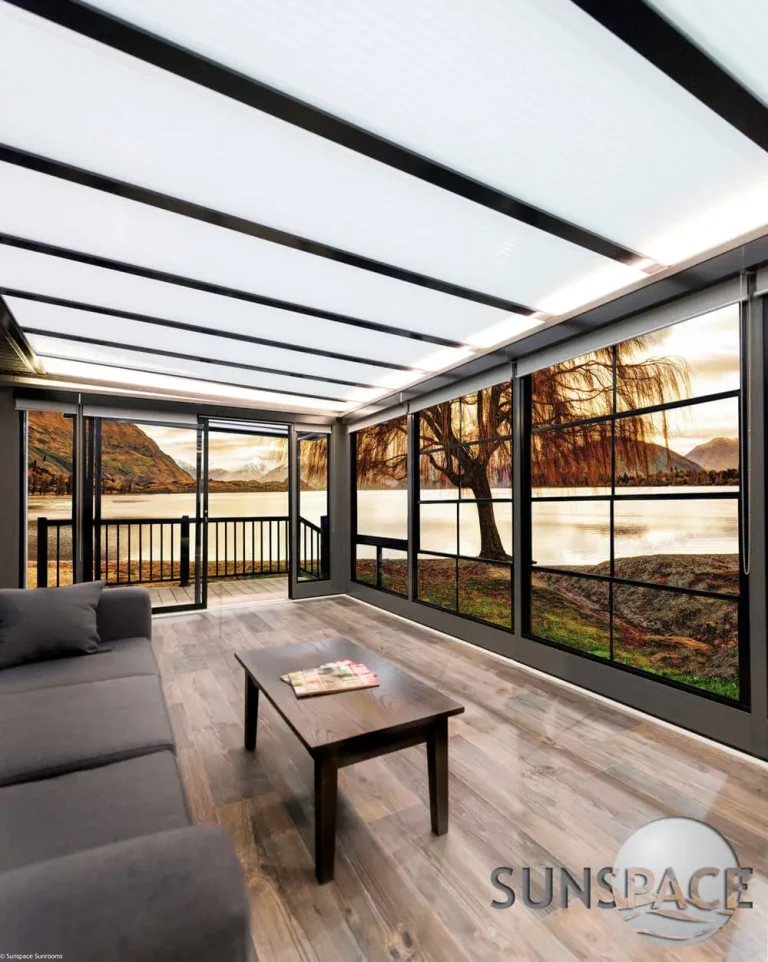
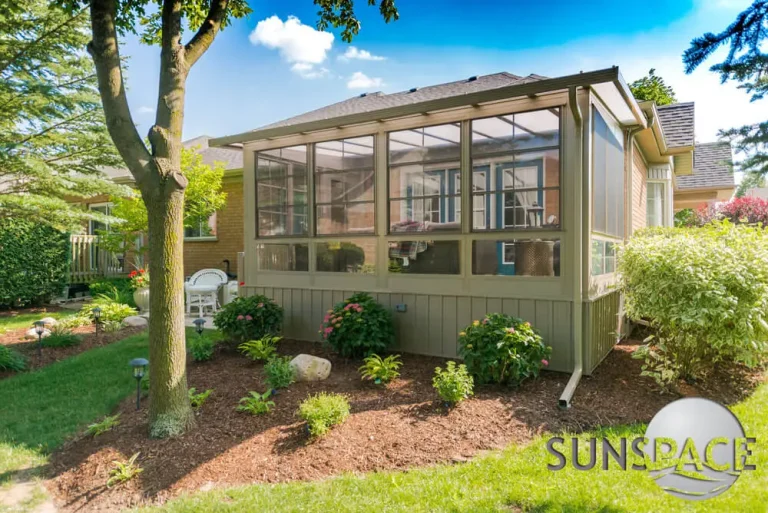
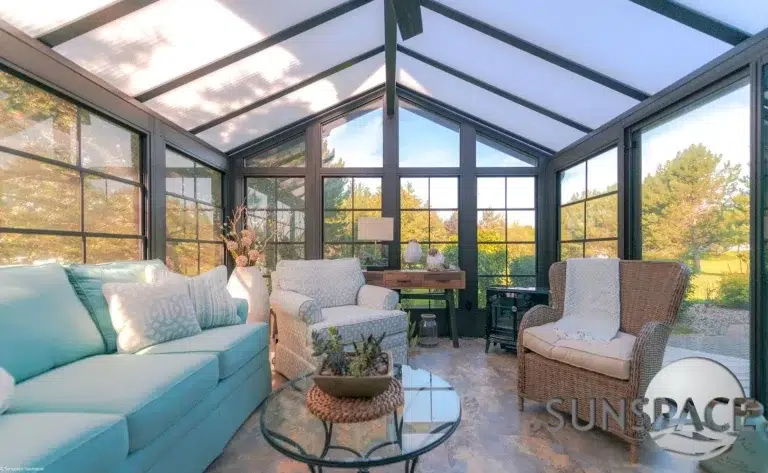
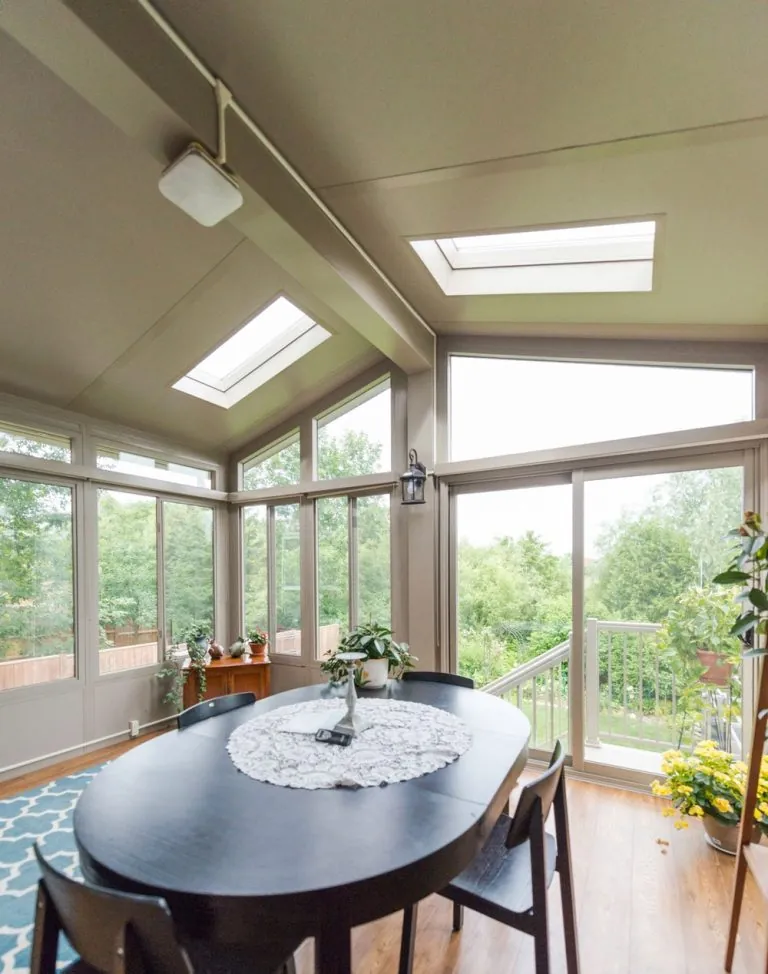
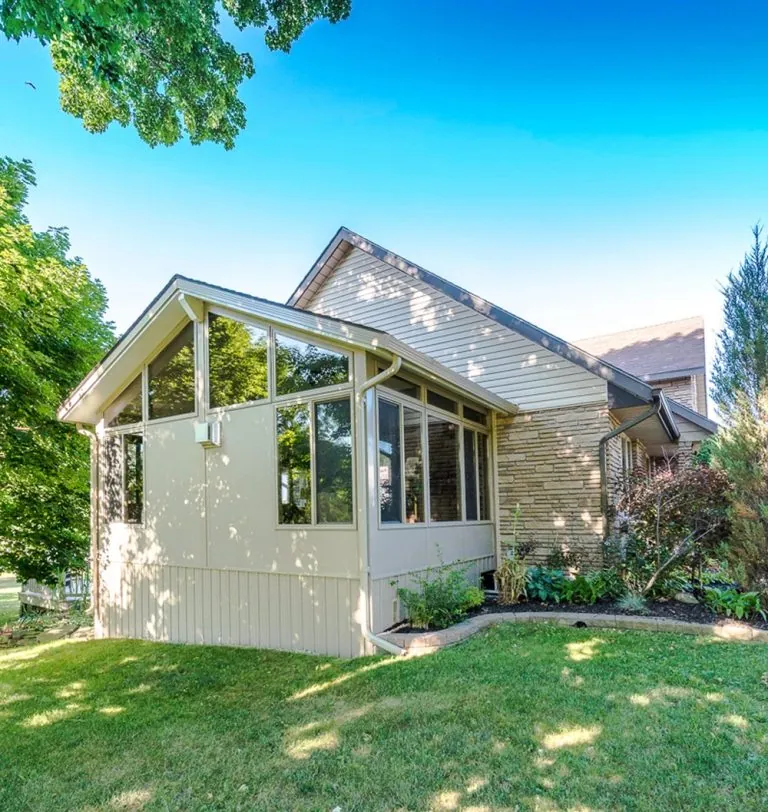
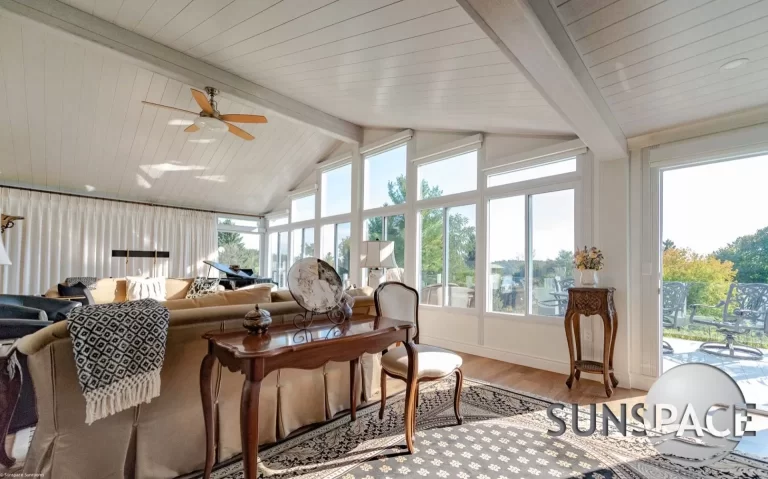
Thinking about a sunroom and wondering whether it truly adds value or just looks great in listing photos? In Portland, ME, that decision has to stand up to snow loads, salt air, and how local buyers actually shop.
This guide breaks down sunroom return on investment in practical terms, explains how ROI typically works in Maine, and shows which design choices tend to raise or limit resale value in the Portland market.
You might find it helpful to speak with a local sunroom expert. They can help you feel more confident in your decision.
What does Sunroom Return on Investment Really Mean?
Sunroom ROI has two parts: money and lifestyle. Both matter in a long‑winter climate.
- Financial ROI: What portion of your build cost shows up in your resale price
- Enjoyment ROI: How much daily comfort, light, and use you gain
You invest to build the room, then appraisers and buyers decide how much value it adds. National reports show sunroom-style additions often return only part of their cost at resale, commonly around 40–60%, depending on size, quality, and market demand.
In colder states like Maine, the return often trends higher when the sunroom functions as a true living space rather than a warm-weather room.
On the lifestyle side, a sunroom can become a warm winter coffee spot, plant room, or workspace that still feels close to the outdoors. In coastal Maine, many owners rate this “enjoyment ROI” as highly as the financial side.
Homeowners who work from home or who want extra gathering space often find the daily use more valuable than the resale number alone.
Appraisers and buyers tend to see a well-built sunroom as an extra living area with strong natural light, which can help a listing stand out in Portland’s market.
Agents often highlight sunrooms in listings because they photograph well and make a home feel larger and more inviting during showings.
Do Sunrooms Add Value in Portland, ME?
A well-planned sunroom usually adds some value and buyer appeal in New England, but it rarely returns every dollar spent.
Recent ranges for sunrooms show:
- Simple three-season rooms can start around the mid‑teens to tens of thousands of dollars, depending on size and structure.
- Four-season rooms with insulation, high-performance glass, and full HVAC run higher, reflecting their use year-round.
Many Portland homeowners exploring sunroom pricing compare these costs to decks, screened rooms, or small bump-out additions to see which upgrade fits their needs best.
Many remodeling sources suggest enclosed additions and comparable projects recoup roughly 40–70% of their cost at resale, with around 50% as a common midpoint. In New England, buyers often appreciate a bright, sheltered room that works in March and November, not just July.
For families relocating to Portland from warmer states, a four-season sunroom often becomes a must-have because it offers an outdoor-feeling space without Maine’s winter limitations.
Local buyers in Portland also watch for snow-load design, wind resistance, and code compliance. A room that clearly handles these and was built with permits usually feels more trustworthy than a light, “bolt‑on” structure.
Homes with documented, code-compliant sunrooms tend to appraise more smoothly and reduce concerns during inspection negotiations.
What Factors Change Your Sunroom ROI?
ROI shifts with design, build quality, and how well the room fits the home.
Three-Season vs Four-Season
Three-season and four-season rooms affect cost and value in different ways.
This difference matters in Maine, where winter conditions often push buyers toward year-round options.
| Three-season rooms | Four-season rooms | |
| Features | Lighter insulation and porch-style windows | Stronger insulation and better glass |
| Conditioning | Less comfort on very cold days | Connected to the main heating (and often cooling) |
| Cost/Value | Lower upfront cost | Higher cost but true year‑round use |
In Maine, buyers usually prefer rooms they can use most of the year, so a solid four-season room often supports a stronger long‑term return.
Because Portland homes spend many months in colder weather, a four-season sunroom often reads as livable square footage instead of bonus space.
Construction Quality, Permits, and Code
Portland inspectors and buyers look carefully at structure and code. A sunroom that looks temporary often brings less value than one that feels original.
Helpful details include:
- Footings or foundations built for local frost depth and snow loads
- Framing sized for coastal wind and roof loads
- Good weatherproofing against wind‑driven rain and meltwater
- Full permits and inspections under local building codes
These steps cut your risk of movement or leaks and help appraisers treat the room as a real living space.
Rooms built without proper permitting can raise red flags and reduce what buyers are willing to pay at resale.
Energy Efficiency and Operating Cost
Big glass areas can boost comfort or energy use, depending on quality. Lower-grade windows may raise winter bills and cause hot, sunny afternoons.
Better choices:
- Cold‑climate glazing
- Thermally broken frames
- Insulated roof and wall panels
- Orientation and shading that control glare and heat
New England builders often treat these features as standard, which helps keep yearly costs reasonable and attracts energy‑conscious buyers.
Energy-efficient design also helps four-season rooms qualify as usable conditioned space, which can influence how agents market the home.
Layout and Style
ROI tends to rise when the sunroom fixes a real layout issue. A bright room off a dark living area can open the main floor and make the home feel larger.
Matching rooflines, siding, trim, and flooring to the existing house also helps the room read as finished square footage, not a temporary add‑on.
Portland buyers often favor sunrooms that blend into the architecture instead of looking like a later addition.
How does Sunroom ROI Compare to Other Projects?
Here is a quick snapshot using national remodeling and sunroom data. Always confirm with a local agent or appraiser.
| Project type | Typical cost recouped at resale | Notes |
| Sunroom or enclosed addition | Around 40–60% | It may be higher for quality four-season rooms in strong markets. |
| Midrange deck or patio project | Roughly 50–70% | Works well where outdoor living is popular in warmer months. |
| Midrange bathroom remodel | Often 55–70% | Very marketable, though more disruptive to complete. |
Because of this mix, many Portland owners treat a sunroom as a “hybrid” investment: part value, part daily enjoyment. For a broader context, tools like Remodeling Magazine’s Cost vs. Value Report or the National Association of Realtors research offer more national benchmarks.
Local trends from recent Portland sales can also help clarify how much value buyers assign to sunrooms in different price ranges.
Is a Sunroom a Smart Move for a Portland Home?
A few clear questions usually give a better answer than any single ROI number.
Think about:
- How many months each year the room will see real use
- Whether it replaces another project (deck, bump‑out) or adds to your list
- Your likely sales window and what local agents say about sunrooms in your price band
- Comfort with recovering part of the cost at resale and part through daily use
Many Maine projects treat Sunroom Return on Investment as shared between the current owner, the future buyer, and the climate. The goal is a bright, durable space that feels good, shows well, and passes inspection without surprises.
If you plan to stay in your home for several years, the combined lifestyle and financial return tends to be noticeably higher.
Your Next Step
If you are weighing a sunroom for your Portland area home and want a straightforward conversation about cost, options, and realistic ROI, reach out to Sunspace by Sunrise Sunrooms. A short chat with owner Ken Beesley, local outdoor living specialist, can give you the confidence to move ahead or press pause with clear eyes.
Frequently Asked Questions About Sunroom Value in Portland, ME
1. Do sunrooms add value to your home?
Yes, they usually do. A well-planned sunroom can add value and buyer appeal, especially here in Portland. Appraisers and buyers often treat a quality sunroom as extra living space with great natural light, which helps a home stand out in the market. You may not get every dollar back at resale, but most homeowners recover a meaningful portion of their investment.
2. How much value does a sunroom add?
Most sunroom projects return part of their cost, often in the range of about 40 to 60 percent, depending on size, quality, and market demand. In New England, buyers tend to place a higher value on spaces they can use year-round, so four-season rooms often yield greater returns than lighter, warm-weather rooms.
3. Is a sunroom worth the investment?
It can be, depending on what you want out of it. There are two kinds of return: financial and lifestyle. The financial return is the portion you may get back when you sell. The lifestyle return is the comfort, light, and everyday use you enjoy while living in the home. Many Portland homeowners find that the combined benefits make the investment worthwhile, even if the project does not return every dollar.
4. What is the difference between a three-season room and a four-season room?
A three-season room has lighter insulation and porch-style windows, so it is best during the milder months. A four-season room has stronger insulation, better glass, and proper heating and cooling, making it comfortable year-round. Because four-season rooms work well in cold climates like Maine, they usually support a more substantial long-term return.
5. What kind of sunroom adds the most value?
In Maine, a well-built four-season room usually adds the most value because buyers want space they can use year-round. Strong insulation, good windows, and a design that feels like part of the original home make the most significant difference.
6. Are sunrooms energy efficient?
They can be, depending on the choices you make. Features like cold climate glass, insulated roof and wall panels, and thermally broken frames help control heat and cold. When a sunroom is built with these details, it stays more comfortable and avoids the spikes in energy use that come with lower-grade materials.
7. Does a sunroom count as square footage?
A sunroom may count as square footage if it meets the same standards as the rest of the home. That usually means it has proper insulation, heating, and construction that is comparable to your main living areas. A fully conditioned four-season room is much more likely to be treated as finished space than a lighter, three-season room.
8. Do sunrooms increase property taxes?
They can, but it depends on how your local assessor views the project. Any improvement that adds usable living space or increases the home’s overall footprint may raise the assessed value. A simple three-season room might have a minor impact than a fully heated four-season room, but both have the potential to change your tax assessment.
9. How long does a sunroom last?
A sunroom can last for many years when it is built on a proper foundation and designed for local conditions like snow load, wind, and moisture. Strong framing, quality windows, and good weatherproofing help the structure hold up over time. Rooms that are built to handle Maine’s climate generally provide long-term enjoyment with fewer issues.
10. Is it cheaper to build a sunroom or an addition?
A sunroom is usually less expensive than a complete home addition because it has a lighter structure and fewer mechanical requirements. A four-season sunroom will cost more than a three-season room, but still tends to fall below the price of a complete traditional addition. Many homeowners choose a sunroom because it gives them a bright, comfortable space without the cost and complexity of major construction.