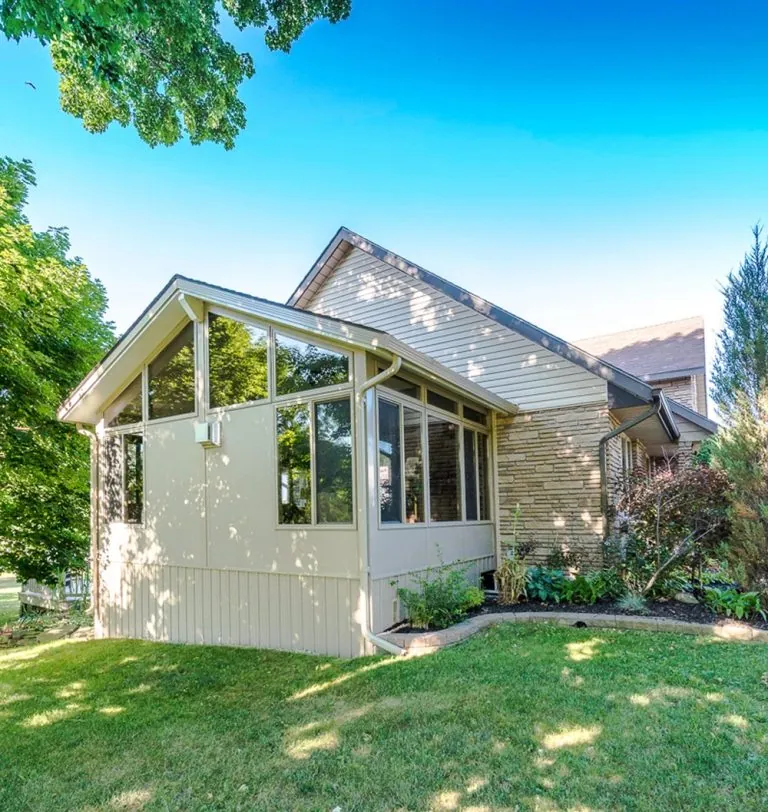
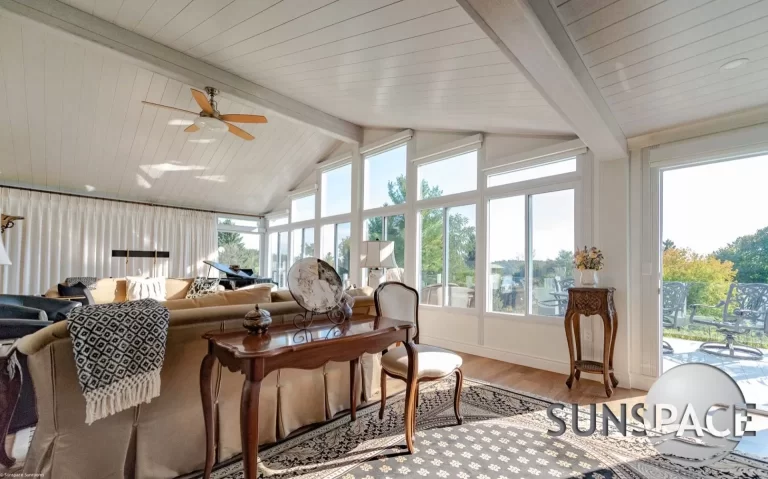
You want more light and space, but Maine winters make the choice feel risky. The real question is simple: which sunroom will feel good for most of the year without blowing the budget?
Many homeowners in Portland start this comparison because they want more usable space, but are unsure how each type performs in cold weather.
In this guide, you will find what sets Three-Season vs Four-Season Sunrooms apart, how Portland’s climate affects comfort, and how to pick the right option with less guesswork.
You will also see how building codes, energy performance, and snow loads shape the right choice for Maine homes.
If you have questions about Three-Season vs. Four-Season Sunrooms for a specific Portland site. Speak with a local sunroom contractor in Portland for a short, practical consult and clear next steps.
An expert can help you compare solutions such as insulated glass, thermally broken frames, and conditioned room designs to understand which fits your goals.
What We Will Discuss in this Guide
- Clear definitions of three-season and four-season rooms.
- How Portland, ME, weather, codes, and snow loads affect design.
- A quick comparison table, decision tips, and a short FAQ you can scan.
- Plus, practical notes on comfort, condensation control, and energy expectations for Maine homeowners.
What do “Three-Season” and “Four-Season” Actually Mean?
A three-season sunroom is enclosed and comfortable for spring, summer, and fall, but it isn’t kept as warm as the rest of the house in winter. A four-season sunroom is a conditioned space and works like a true room addition all year, including January.
Three-season rooms often appeal to homeowners who want extra space without the cost of fully conditioned construction.
These terms tie back to national standards (AAMA/NSA 2100) and the residential building code, which decides how a sunroom is built and whether it counts as part of the home’s heated envelope.
If the room is part of the heated envelope, buyers and appraisers typically treat it more like a finished living space.
Which Code Category Applies?
Codes sort sunrooms into five types. Categories I–III are thermally isolated and unconditioned, which lines up with typical three-season use. Category IV is still separated from the main house but has its own heat or cooling, while Category V is conditioned and open to the home, which is what most people think of as a four-season room.
Understanding your category helps clarify whether the room will feel like a porch enclosure or a true addition.
For Categories IV and V, the walls, roof, windows, and doors have to meet energy code targets, so U-factor, SHGC, and insulation values matter more for Maine homes.
This is why window choice has such a big impact on winter comfort in Portland.
What does Portland’s Climate Mean for Your Choice?
Portland has comfortable summers and long, cold winters with snow and wind. Average temperatures run from about 16°F in winter to around 78°F in summer, so winter glass performance and airtightness make a real difference in how the room feels.
Homes near the water often see stronger wind exposure, which can influence frame and glass selection.
Because the temperature swings are big, poorly insulated frames and glass can collect condensation, especially on freezing nights, if humidity isn’t managed well.
Humidity control becomes especially important if you plan to use plants or a hot tub in the room.
Structure, Glass, and Insulation: What Really Matters
Three-season rooms often use lighter framing, simpler glass, and less insulation, so they feel great in shoulder seasons but cool quickly in deep winter. Four-season rooms need insulated walls and roof, thermally broken frames, and tested windows and doors to keep comfort levels closer to the rest of the home.
This is why four-season rooms typically cost more but deliver more predictable year-round comfort.
Those details connect directly to the sunroom standard and to energy codes that govern conditioned additions, including how fenestration and opaque assemblies are rated.
Choosing products with NFRC labels helps ensure the performance numbers are accurate.
Practical Takeaways
- Glass and ratings: Look for NFRC labels, so U-factor and SHGC numbers reflect the whole window; a lower U-factor usually means better winter comfort in Portland’s heating-heavy climate.
- Frames and breaks: Thermally broken aluminum or composite frames cut heat loss at the edges and help reduce drafts and condensation when it’s below freezing.
- Air and water: Higher sunroom categories include minimum air and water performance for windows and doors, which helps during heavy coastal rain and wind events.
These features also influence long-term maintenance, since better-performing rooms typically show fewer moisture or draft issues.
Heating, Cooling, and Condensation Control
A three-season room stays thermally separate from the home. It may have portable heaters or a small independent unit, but the doors or windows between it and the main house remain in place.
A small heater may take the edge off, but it will not make the space feel like a true winter living area.
A four-season room is a conditioned space. If it’s open to the home, it needs insulation, glass, and HVAC sized to meet the same comfort and energy expectations as other rooms in the house.
This is often what makes Category V rooms feel indistinguishable from a full home addition.
Key Comfort Notes
- Ventilation and humidity: Sunspaces feel best with planned air movement, managed humidity, and glass that balances sun gain and glare across seasons.
- Condensation risk: Warm indoor air meeting cold glass can fog or drip; better U-factors, thermal breaks, and basic humidity control lower that risk in winter.
- Many Portland homeowners add simple ventilation fans or small dehumidifiers to improve year-round comfort.
Permits, Codes, and Snow in Maine
MUBEC (Maine Uniform Building and Energy Code) applies statewide, and towns with more than 4,000 residents must enforce it, which includes the Portland area. Maine is also moving to enforce towns to the 2021 code set, so energy and structural rules are getting tighter over time.
This makes early planning important so your design aligns with current code expectations.
The state publishes ground snow loads by town, and engineers use those values to size roofs, ledgers, and footings; sunrooms must handle local snow and drifting patterns, not just “typical” loads.
Snow load is one of the biggest design differences between Maine sunrooms and sunrooms built in warmer states.
What this Means for Your Project
- Structure: Roofs, posts, and connections have to carry local wind and snow loads under recognized code sections and the same references used by the sunroom standard.
- Energy: Conditioned sunrooms trigger energy code checks, so expect NFRC-labeled windows and documented R-values in walls and roof assemblies.
- Permits: Most Portland-area sunrooms go through permit review and inspections under MUBEC, including energy and life-safety items.
Working with a contractor familiar with MUBEC helps avoid surprises during inspection.
Which Option Fits Your Goals and Budget?
The right choice starts with how often the space will be used. For spring‑through‑fall meals, plants, and a casual sitting area, a three-season sunroom can be a smart, lower-cost option. For winter coffee, a year‑round office, or seamless living space that feels like part of the house, a four-season room usually delivers better value in daily use.If resale appeal matters, buyers in Maine tend to prefer fully conditioned rooms because they function more like additional living space.
A Quick Decision Lens
- Use pattern: Light, fair‑weather use leans three‑season; daily and winter use leans four‑season.
- Energy and comfort: Four‑season rooms need code‑level insulation and glass to feel like the rest of the home, which is how Category V is treated in code.
- Resale feel: A Category V, fully conditioned room tends to function more like a true addition, which many buyers appreciate in a cold climate.
- Site factors: Shaded lots, strong wind, and heavy drifting snow often push designs toward stronger frames and better glass, which can favor a four‑season approach in many Portland neighborhoods.
Three-Season vs Four-Season at a Glance
| Aspect | Three-Season | Four-Season |
| Code category | Usually Categories I–III; thermally isolated and unconditioned | Category V when open to the main house and conditioned |
| Energy code | Not treated as conditioned space | Windows, doors, and opaque parts must meet the energy code when conditioned |
| HVAC | None or separate; stays isolated | Connected or fully conditioned for year‑round use |
| Winter comfort | Limited without heat and thermal breaks | Built for winter with low U‑factor glass and insulated assemblies |
| Structural review | Wind and snow considered; lighter envelope targets | Full structural plus energy compliance; check town snow loads |
This table helps homeowners quickly see why cost and comfort differ so much between the two room types.
FAQs
Can a three-season sunroom work in a Maine winter?
It can feel pleasant on sunny days, but without strong insulation and steady heat, it won’t match the rest of the house on very cold days because it stays thermally separated.
Do I need a permit for a sunroom around Portland?
Yes. In MUBEC towns, over 4,000 residents, permits and inspections are expected for real additions, and Maine has updated to 2021 codes for enforcing towns as of April 7, 2025.
What do U-factor and SHGC mean?
U‑factor measures how fast heat moves through a window; a lower number usually means better winter performance. SHGC shows how much solar heat gets through the glass, so the right value helps with both summer comfort and winter gain.
How can condensation on cold nights be reduced?
Thermally broken frames, low U‑factor glass, and basic humidity control with good ventilation go a long way toward cutting fogging and drips on glass in winter.
What is the difference between a three-season and a four-season sunroom?
A three-season sunroom is enclosed but not built to stay warm in deep winter, so it works best from spring through fall. A four-season sunroom has insulation, better glass, and proper heating and cooling, which makes it feel like a real room addition all year. The big difference is that a four-season room is designed to meet comfort and energy expectations even in January.
Can you use a three-season sunroom in the winter?
You can enjoy it on sunny, mild winter days, but it will not feel like the rest of your home when the temperatures drop. Since a three-season room is thermally separated and not fully insulated, it cools down quickly on freezing nights. It is best treated as a fair-weather space with occasional winter use.
What kind of insulation does a four-season sunroom need?
A four-season room needs insulated walls and a proper roof system, along with glass and frames that meet energy code targets. In Maine’s climate, that includes low U-factor windows and thermally broken frames, so the room stays comfortable in winter and avoids issues like drafts or condensation.
Is a four-season room worth it?
A four-season room can be worth it if you want space that feels comfortable all year and functions like part of your home. Since it is fully insulated and conditioned, it delivers steady comfort through Maine’s winter, which many people find adds more daily value than a room they can only use part of the year. The decision usually comes down to how often you want to use the space and how important winter comfort is for your lifestyle.
Is a three-season room heated?
A three-season room is not heated the same way the rest of your home is. You can use small portable heaters or a separate unit, but the room stays thermally isolated, and the doors or windows between it and the main house remain in place. This setup makes it more of a mild-weather space rather than a true winter room.
How much does a three-season room cost compared to a four-season room?
A three-season room generally costs less because it uses lighter framing, simpler glass, and less insulation. A four-season room needs insulated walls, an insulated roof, and higher-performing windows and doors, which increases the cost. The difference reflects how each room is built and how much of the year you want it to stay comfortable.
Can you convert a three-season room into a four-season room?
It is possible in some cases, but it depends on how the original room was built. A conversion usually means upgrading insulation, replacing windows and doors, and improving the roof and framing so the room can meet energy and comfort expectations for year-round use. Some three-season rooms can be upgraded, while others may need more extensive rebuilding.
Does a four-season sunroom add more value than a three-season sunroom?
A four-season room typically adds more perceived value because it works like a real living space in every season. Buyers in Maine tend to appreciate rooms that are fully conditioned and comfortable in winter, so a four-season room usually feels more like an extension of the home compared to a lighter, fair-weather design.
Does a four-season room count as square footage?
A four-season room may count as square footage if it is fully conditioned and built to the same standards as the rest of the home. When the insulation, glass, and heating system meet the expectations for a regular living space, it is more likely to be treated as a finished area rather than a separate enclosure.
What’s a Low-Stress Next Step?
Start with a short list on paper. Note which months and times of day the room should be comfortable, where the wind hits your lot, and where the snow tends to pile up. Then consider a quick consult to turn those notes into clear options for framing, glass, and heating or cooling.
A short, friendly review with a Sunspace by Sunrise Sunrooms specialist can cut through guesswork and give a realistic path, whether that leads to a lean three-season space or a full four-season room.